W-Sitting in Toddlers: What It Means and How to Support Core Strength at Home
Simple, play-based ways to support your child’s development
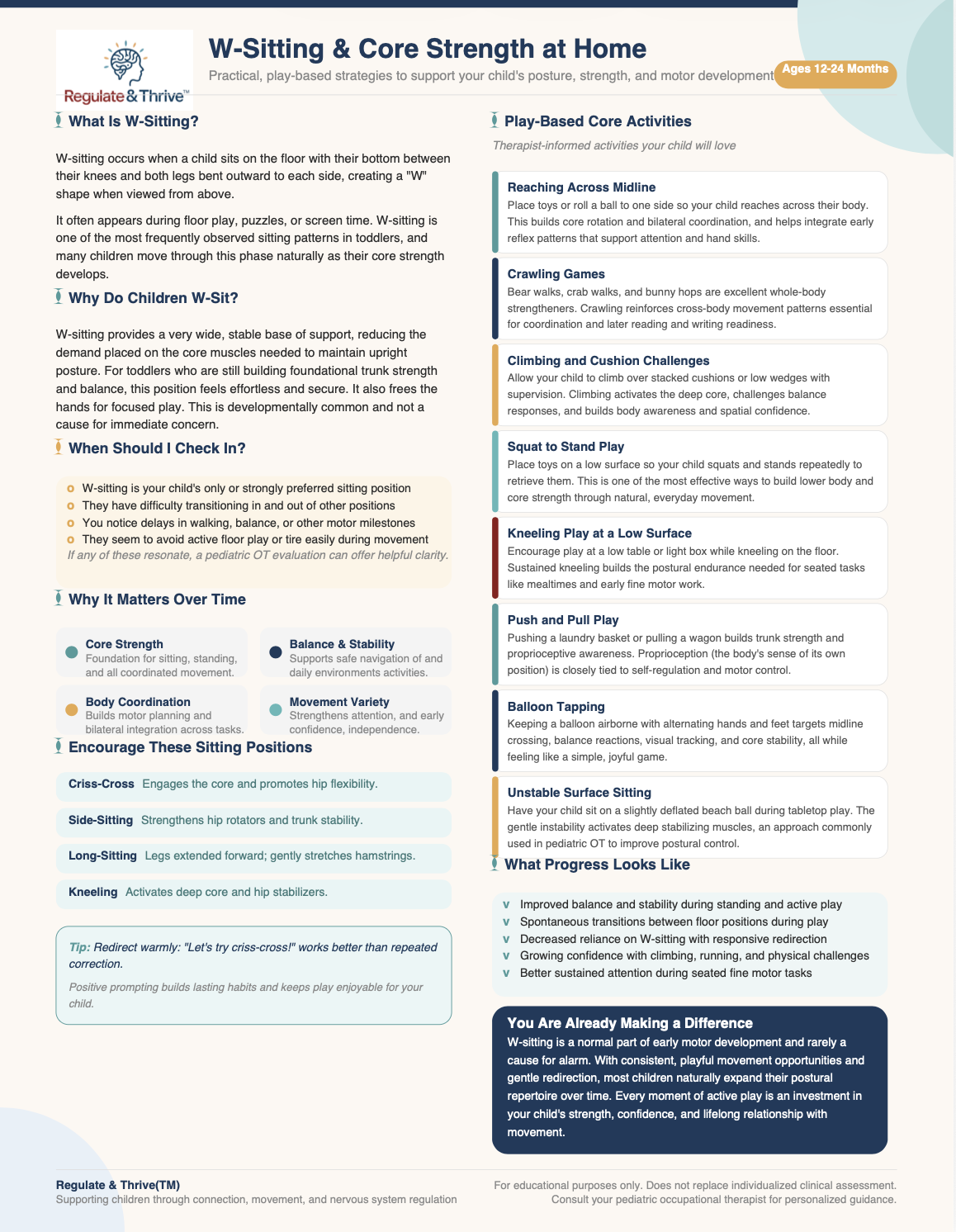
If you’ve noticed your child sitting in a “W” position during play, you’re not alone. It’s one of the most common things parents ask about, and the good news is, it’s usually not something to panic about.
What matters most is helping your child build strength, balance, and movement variety over time.
What Is W-Sitting?
W-sitting is when a child sits on the floor with their knees bent and legs out to the sides, forming a “W” shape.
You’ll often see this during:
Floor play
Puzzles
Screen time
Many toddlers naturally move in and out of this position as they develop.
Why Do Children W-Sit?
W-sitting gives children a wide, stable base of support. This means their body does not have to work as hard to stay upright.
For children who are still developing core strength and balance, it simply feels easier and more secure.
It also frees up their hands for play, which is why you may see it often during focused activities.
When Should You Pay Closer Attention?
While W-sitting can be part of typical development, it may be worth a closer look if:
It is your child’s only or strongly preferred sitting position
They struggle to move in and out of other positions
You notice delays in balance, walking, or coordination
They avoid active play or seem to tire quickly
If any of these sound familiar, an occupational therapy evaluation can provide helpful guidance and support.
Why This Matters Over Time
Your child’s core strength and movement patterns impact far more than just how they sit.
Core Strength
Supports sitting, standing, and all coordinated movement
Balance and Stability
Helps your child move safely and confidently through their environment
Coordination
Builds the foundation for using both sides of the body together
Movement Variety
Supports attention, independence, and overall development
Sitting Positions to Encourage
Instead of constantly correcting W-sitting, gently guide your child into other positions during play:
Criss-cross sitting for core engagement
Side sitting to build hip strength and rotation
Long sitting with legs forward for flexibility
Kneeling to activate core and postural muscles
A simple prompt like, “Let’s try criss-cross,” is often all you need.
Play-Based Core Activities You Can Start Today
These are easy, effective, and actually fun for kids.
Reaching Across the Body
Place toys slightly to one side so your child has to reach across their body.
This builds core rotation, coordination, and helps reduce reliance on early reflex patterns.
Crawling and Animal Walks
Bear walks, crab walks, and bunny hops are powerful for full-body strength.
They also support cross-body coordination needed for later skills like reading and writing.
Climbing and Cushion Play
Let your child climb over couch cushions or soft obstacles.
This strengthens the core, challenges balance, and builds confidence.
Squat to Stand Play
Place toys low so your child has to squat and stand repeatedly.
This is one of the most natural and effective ways to build strength.
Kneeling at a Surface
Have your child play at a low table while kneeling.
This builds endurance for seated activities like eating and fine motor tasks.
Push and Pull Activities
Pushing a laundry basket or pulling a wagon builds strength and body awareness.
This also supports regulation and motor control.
Balloon Play
Keep a balloon in the air using hands and feet.
This targets balance, coordination, and midline crossing in a playful way.
Sitting on an Unstable Surface
Try sitting on a slightly deflated ball or folded cushion during play.
This gently activates deep core muscles and improves postural control.
What Progress Can Look Like
Over time, you may notice:
Improved balance and coordination
More variety in sitting positions
Less reliance on W-sitting
Increased confidence with movement
Better attention during seated tasks
You’re Already Doing a Great Job
W-sitting is a common part of early development. With gentle guidance and consistent opportunities for movement, most children naturally build the strength and coordination they need.
Small, playful moments each day create meaningful progress over time.
Want More Support?
If you’re unsure where to start or want a more personalized plan, occupational therapy can help guide you with strategies tailored to your child.
Regulate & Thrive™
Supporting children through connection, movement, and nervous system regulation